Shunt Valve Library
Every valve, every setting — in mmH₂O, cmH₂O and mmHg
Settings, tolerances, MRI rules, X-ray identification, adjustment tools and recalls for 31 valves and add-on devices — each value transcribed from the manufacturer's instructions for use, brochure or FDA record linked on the card.
Jump to: CERTAS Plus · Hakim Programmable (CHPV) · Strata II (with Delta chamber) · Strata NSC (no siphon control) · StrataMR II · Polaris (SPV) · Sophy Mini SM8 · Sophy SM3 · proGAV 2.0 · proGAV (1st generation) · M.blue · M.blue plus · proSA · Hakim Precision (fixed) · Delta valve · CSF-Flow Control (PS Medical) · Sophy Mini SM1 · GAV 2.0 · GAV (classic) · paediGAV · DualSwitch Valve (DSV) · miniNAV · Integra DP · Spitz-Holter · SHUNTASSISTANT 2.0 (SA 2.0) · SHUNTASSISTANT / paediSHUNTASSISTANT · SiphonX · SiphonGuard · Gravity Compensating Accessory · OSV II (flow-regulating) · M.flow
Conversions used: cmH₂O = mmH₂O ÷ 10 · mmHg = mmH₂O × 0.0736 (1 mmHg = 13.6 mmH₂O). Medtronic publishes ranges at 5 → 50 mL/h; the nominal value shown is the range midpoint (the value Medtronic's StrataVarius displays).
Codman CERTAS Plus Programmable Valve · Integra (Codman) · Current
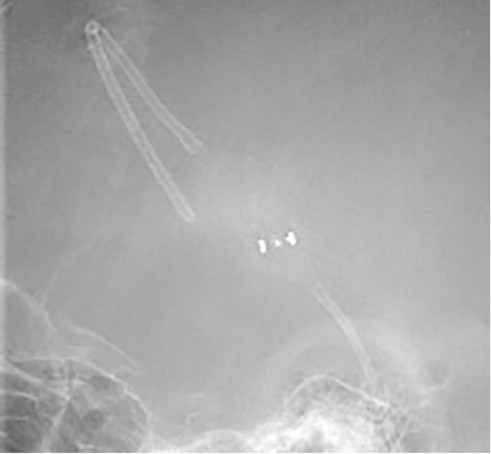
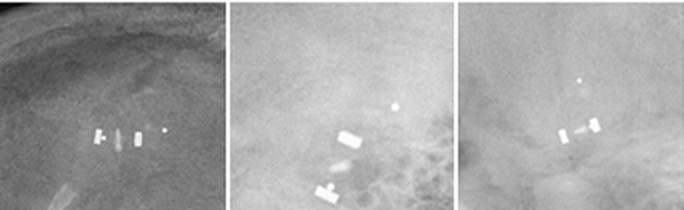
8-setting programmable ball-in-cone valve; setting 8 is a flow-limiting 'virtual off' (≥400 mmH2O). Optional integrated SiphonGuard.
| Mechanism | Ball-in-cone differential-pressure valve; magnetically adjustable rotating construct. |
|---|---|
| Measured as | Average pressure across 5–50 mL/h (Integra performance chart), same in any gravitational orientation. |
| Tolerance | ±20 mmH2O (settings 1–3) · ±25 (setting 4) · ±35 (settings 5–7) |
| MRI | Resists unintended change at 3 T — Confirm the setting after MRI (Integra). |
| X-ray ID |
|
| Adjustment | CERTAS Tool Kit (mechanical) or CERTAS Plus Electronic Tool Kit (not for the MR suite). Audible click per step; safety stop between settings 1 and 8. Keep tissue over the valve <10 mm. |
| Setting | mmH₂O | cmH₂O | mmHg | Tolerance |
|---|---|---|---|---|
| 1 | 25 | 2.5 | 1.8 | ±20 |
| 2 | 50 | 5.0 | 3.7 | ±20 |
| 3 | 80 | 8.0 | 5.9 | ±20 |
| 4 | 110 | 11.0 | 8.1 | ±25 |
| 5 | 145 | 14.5 | 10.7 | ±35 |
| 6 | 180 | 18.0 | 13.2 | ±35 |
| 7 | 215 | 21.5 | 15.8 | ±35 |
| 8 Virtual off — flow-limiting, minimum 400 mmH2O | ≥400 | 40.0 | 29.4 |
Practical points from the manufacturer
- Made available after March 2015 (Integra).
- Setting 8 is not 'closed' — it limits flow with a ≥400 mmH2O minimum.
Codman HAKIM Programmable Valve · Integra (Codman) · Current
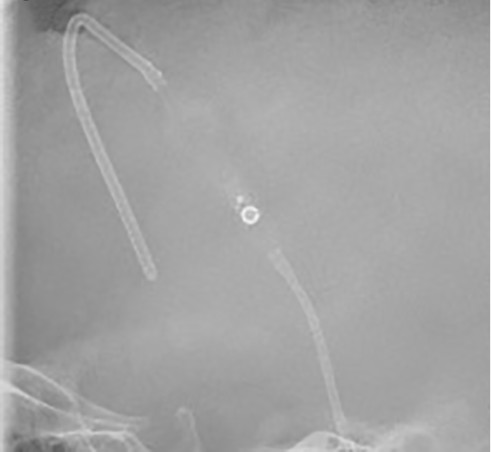
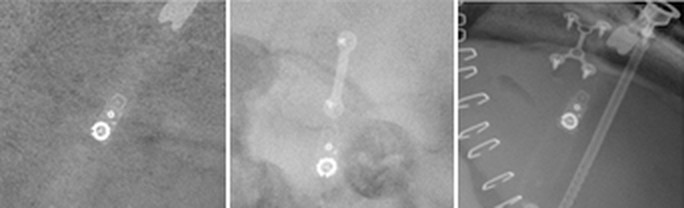
18 settings from 30 to 200 mmH2O in 10 mmH2O steps; programmed with a codified magnetic signal that drives an internal stepper motor. Available with SiphonGuard.
| Mechanism | Synthetic-ruby ball-in-cone; flat stainless spring on a stepper-motor cam (titanium chassis). |
|---|---|
| Measured as | Nominal setting = valve opening pressure. Integra's L-P IFU also reports the measured system pressure with a 120 cm peritoneal catheter at 20 mL/h (shown as 'with catheter'). |
| Tolerance | ±14 mmH2O (settings 30–120) · ±19 (130–200), regardless of orientation; ~10 mmH2O per step |
| MRI | Up to 3 T will not damage it but MAY CHANGE THE SETTING — Always confirm the setting after MRI (X-ray or programmer). Repeated 3 T exposure may demagnetize the rotor and reduce programmability. |
| X-ray ID |
|
| Adjustment | Codman HAKIM programmer (82-3190R) or VPV System. Keep ≤1 cm tissue over the mechanism (programmer reaches ~2 cm). Programmer is MR Unsafe. |
| Setting | mmH₂O | cmH₂O | mmHg | Tolerance | With 120 cm catheter @20 mL/h |
|---|---|---|---|---|---|
| 30 | 30 | 3.0 | 2.2 | ±14 | 61 |
| 40 | 40 | 4.0 | 2.9 | ±14 | 68 |
| 50 | 50 | 5.0 | 3.7 | ±14 | 79 |
| 60 | 60 | 6.0 | 4.4 | ±14 | 86 |
| 70 | 70 | 7.0 | 5.1 | ±14 | 97 |
| 80 | 80 | 8.0 | 5.9 | ±14 | 106 |
| 90 | 90 | 9.0 | 6.6 | ±14 | 116 |
| 100 | 100 | 10.0 | 7.4 | ±14 | 124 |
| 110 | 110 | 11.0 | 8.1 | ±14 | 135 |
| 120 | 120 | 12.0 | 8.8 | ±14 | 144 |
| 130 | 130 | 13.0 | 9.6 | ±19 | 153 |
| 140 | 140 | 14.0 | 10.3 | ±19 | 162 |
| 150 | 150 | 15.0 | 11.0 | ±19 | 174 |
| 160 | 160 | 16.0 | 11.8 | ±19 | 184 |
| 170 | 170 | 17.0 | 12.5 | ±19 | 197 |
| 180 | 180 | 18.0 | 13.2 | ±19 | 208 |
| 190 | 190 | 19.0 | 14.0 | ±19 | 221 |
| 200 | 200 | 20.0 | 14.7 | ±19 | 229 |
Practical points from the manufacturer
- While becoming familiar, change by no more than ±40 mmH2O per 24 h and monitor for 24 h (Integra IFU).
- Magnets >80 gauss (speakers, household magnets) near the valve can change the setting.
- X-ray the whole system after implantation, after every reprogramming, and after every MRI.
Medtronic PS Medical Strata / Strata II Adjustable Pressure Valve · Medtronic (PS Medical) · Legacy (widely implanted)
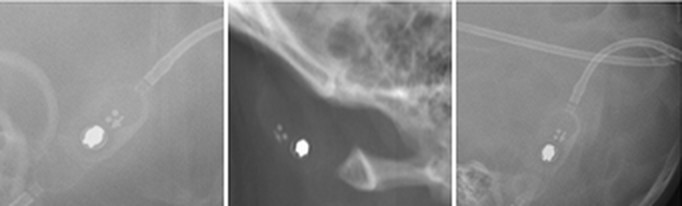
5 performance levels (0.5–2.5). Adjustable ball-in-cone mechanism in series with the Delta chamber siphon-control device.
| Mechanism | Magnetically adjustable valve mechanism + normally closed Delta chamber (opens to positive ventricular pressure, stays closed to negative distal pressure). |
|---|---|
| Measured as | Median pressure at 5 → 50 mL/h. Lying = 0 cmH2O hydrostatic; upright = −50 cmH2O hydrostatic (Medtronic charts). Nominal = midpoint of the range. |
| Tolerance | Not stated on the Strata II chart (Strata NSC: ±15–25 mmH2O) |
| MRI | 3 T will not damage the valve but may change the setting — Check the performance level immediately after MRI (Medtronic). |
| X-ray ID |
|
| Adjustment | Strata hand tools (locator, indicator, adjustment — 45805) or StrataVarius electronic system (45806, numeric mmH2O readout). |
| Setting | Lying mmH₂O | cmH₂O | mmHg | Range (mmH₂O) | Upright mmH₂O | Upright mmHg |
|---|---|---|---|---|---|---|
| PL 0.5 | 20 | 2.0 | 1.5 | 15–25 | 40 (30–50) | 2.9 |
| PL 1.0 | 45 | 4.5 | 3.3 | 35–55 | 60 (50–70) | 4.4 |
| PL 1.5 | 80 | 8.0 | 5.9 | 70–90 | 95 (85–105) | 7.0 |
| PL 2.0 | 115 | 11.5 | 8.5 | 105–125 | 130 (120–140) | 9.6 |
| PL 2.5 | 145 | 14.5 | 10.7 | 135–155 | 157 (147–167) | 11.5 |
Practical points from the manufacturer
- StrataVarius shows a numeric value per level (e.g., PL 2.0 = 115 mmH2O, the chart midpoint).
Medtronic PS Medical Strata NSC Adjustable Pressure Valve (incl. NSC LP) · Medtronic (PS Medical) · Legacy (widely implanted)
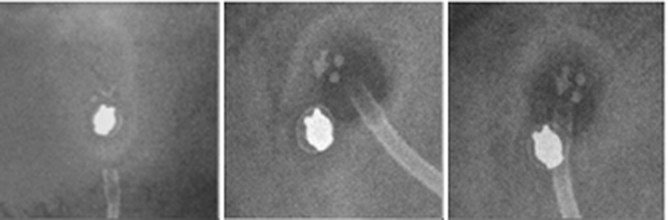
Same adjustable mechanism as Strata without the Delta chamber — so the upper levels run much higher. Also the lumboperitoneal (NSC LP) valve.
| Mechanism | Magnetically adjustable valve mechanism, no siphon control. |
|---|---|
| Measured as | Median pressure at 5 → 50 mL/h; nominal = midpoint. |
| Tolerance | PL 0.5: ±15 mmH2O (5 mL/h), ±25 (50 mL/h); PL 1.0–2.5: ±25 mmH2O |
| MRI | 3 T will not damage the valve but may change the setting — Check the performance level immediately after MRI. |
| X-ray ID |
|
| Adjustment | Strata hand tools or StrataVarius; the NSC LP valve requires StrataVarius (45806) postoperatively. |
| Setting | mmH₂O | cmH₂O | mmHg | Range (mmH₂O) |
|---|---|---|---|---|
| PL 0.5 | 25 | 2.5 | 1.8 | 15–35 |
| PL 1.0 | 45 | 4.5 | 3.3 | 35–55 |
| PL 1.5 | 100 | 10.0 | 7.4 | 90–110 |
| PL 2.0 | 155 | 15.5 | 11.4 | 145–165 |
| PL 2.5 | 210 | 21.0 | 15.4 | 200–220 |
Practical points from the manufacturer
- Same 'PL' number ≠ same pressure across Strata models: PL 2.5 is ~145 mmH2O on Strata II but ~210 on Strata NSC.
Medtronic StrataMR II Adjustable Pressure Valve · Medtronic · Current
No openly licensed radiograph yet — see Medtronic's StrataMR II materials ↗
MRI-resistant successor to Strata: ball-and-cone valve in series with a normally closed siphon-control mechanism; 5 performance levels; regular and small sizes.
| Mechanism | Ball-and-cone pressure valve + siphon-control diaphragm; 'MRI resistance walls' — the mechanism must be lifted then turned to change level. |
|---|---|
| Measured as | Single labelled value per level on Medtronic's horizontal and vertical performance charts (10–50 mL/h). |
| Tolerance | Not stated in the brochure |
| MRI | Designed to withstand unintended change up to 3.0 T — Medtronic still advises verifying the performance level after MRI. MR Conditional 1.5/3 T (max spatial gradient 1900 G/cm). |
| X-ray ID |
|
| Adjustment | StrataMR four-tool set (locator, guider, indicator, adjustment — 45909SMR); tools are not position-dependent. |
| Setting | Lying mmH₂O | cmH₂O | mmHg | Upright mmH₂O | Upright mmHg |
|---|---|---|---|---|---|
| PL 0.5 | 25 | 2.5 | 1.8 | 37 | 2.7 |
| PL 1.0 | 45 | 4.5 | 3.3 | 57 | 4.2 |
| PL 1.5 | 80 | 8.0 | 5.9 | 92 | 6.8 |
| PL 2.0 | 115 | 11.5 | 8.5 | 127 | 9.3 |
| PL 2.5 | 145 | 14.5 | 10.7 | 157 | 11.5 |
Sophysa Polaris Adjustable Pressure Valve · Sophysa · Current
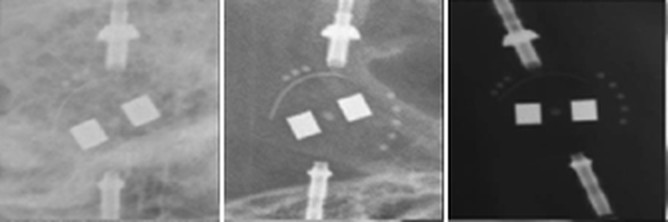
5 positions in four pressure ranges; patented magnetic lock (two opposed micro-magnets) so a one-directional field cannot unlock the rotor. SX models come pre-attached to SiphonX.
| Mechanism | Ruby ball-in-cone loaded by a flat semicircular spring on a rotor; self-locking rotor. |
|---|---|
| Measured as | Calibrated at 10 mL/h, valve alone (catheters add resistance). Standard SPV at 20 mL/h: 35 / 75 / 115 / 160 / 225. |
| Tolerance | −10 / +15 mmH2O |
| MRI | MRI-stable (magnetic lock); MR Conditional 1.5/3 T — Sophysa still recommends checking the setting before and after MRI; valve rotation during a 3 T exposure can change it. |
| X-ray ID |
|
| Adjustment | Polaris Adjustment Kit (locator, compass, magnet) or Electronic Compass; clockwise raises, counter-clockwise lowers. The locator range must match the valve range. |
SPV-140 / SPVA-140 (10–140) — 0 range dots
| Position | mmH₂O | cmH₂O | mmHg |
|---|---|---|---|
| 1 | 10 | 1.0 | 0.7 |
| 2 | 40 | 4.0 | 2.9 |
| 3 | 80 | 8.0 | 5.9 |
| 4 | 110 | 11.0 | 8.1 |
| 5 | 140 | 14.0 | 10.3 |
SPV / SPVA / SPVB standard (30–200) — 1 dot
| Position | mmH₂O | cmH₂O | mmHg |
|---|---|---|---|
| 1 | 30 | 3.0 | 2.2 |
| 2 | 70 | 7.0 | 5.1 |
| 3 | 110 | 11.0 | 8.1 |
| 4 | 150 | 15.0 | 11.0 |
| 5 | 200 | 20.0 | 14.7 |
SPV-300 / SPVA-300 (50–300) — 2 dots
| Position | mmH₂O | cmH₂O | mmHg |
|---|---|---|---|
| 1 | 50 | 5.0 | 3.7 |
| 2 | 100 | 10.0 | 7.4 |
| 3 | 150 | 15.0 | 11.0 |
| 4 | 220 | 22.0 | 16.2 |
| 5 | 300 | 30.0 | 22.1 |
SPV-400 / SPVA-400 (80–400) — 3 dots
| Position | mmH₂O | cmH₂O | mmHg |
|---|---|---|---|
| 1 | 80 | 8.0 | 5.9 |
| 2 | 150 | 15.0 | 11.0 |
| 3 | 230 | 23.0 | 16.9 |
| 4 | 330 | 33.0 | 24.3 |
| 5 | 400 | 40.0 | 29.4 |
SPV-SX — standard + pre-attached SiphonX (+200 upright)
| Position | Lying mmH₂O | cmH₂O | mmHg | Upright mmH₂O | Upright mmHg |
|---|---|---|---|---|---|
| 1 | 30 | 3.0 | 2.2 | 230 | 16.9 |
| 2 | 70 | 7.0 | 5.1 | 270 | 19.9 |
| 3 | 110 | 11.0 | 8.1 | 310 | 22.8 |
| 4 | 150 | 15.0 | 11.0 | 350 | 25.7 |
| 5 | 200 | 20.0 | 14.7 | 400 | 29.4 |
SPV-140-SX — 10–140 + pre-attached SiphonX (+200 upright)
| Position | Lying mmH₂O | cmH₂O | mmHg | Upright mmH₂O | Upright mmHg |
|---|---|---|---|---|---|
| 1 | 10 | 1.0 | 0.7 | 210 | 15.4 |
| 2 | 40 | 4.0 | 2.9 | 240 | 17.7 |
| 3 | 80 | 8.0 | 5.9 | 280 | 20.6 |
| 4 | 110 | 11.0 | 8.1 | 310 | 22.8 |
| 5 | 140 | 14.0 | 10.3 | 340 | 25.0 |
Sophysa Sophy Mini SM8 Adjustable Pressure Valve · Sophysa · Current
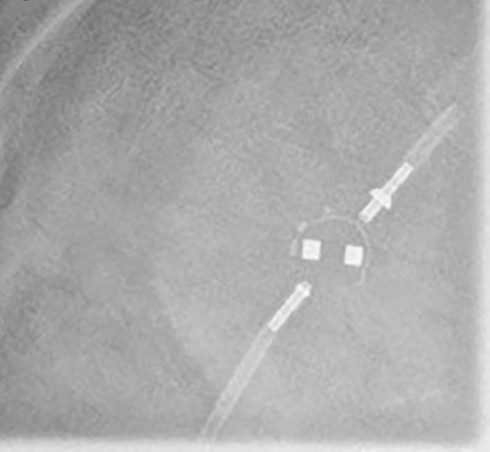
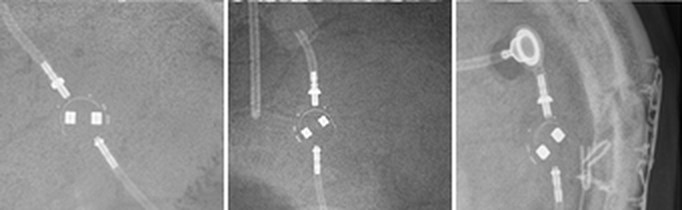
8 positions in four pressure ranges; transparent polysulfone body. No magnetic lock — the most MRI-sensitive current valve.
| Mechanism | Ball-in-cone; magnetic rotor drives a flat spring; two safety stops. |
|---|---|
| Measured as | Calibrated at 10 mL/h, valve alone. |
| Tolerance | −10 / +15 mmH2O |
| MRI | MR Conditional 1.5/3 T but NO magnetic lock — high risk of accidental change — Check the setting before AND after every MRI (adjustment kit or X-ray). |
| X-ray ID |
|
| Adjustment | Sophy Mini Adjustment Kit (locator with range ring, compass, magnet). |
SM8-140 (10–140) — 0 range dots
| Position | mmH₂O | cmH₂O | mmHg |
|---|---|---|---|
| 1 | 10 | 1.0 | 0.7 |
| 2 | 25 | 2.5 | 1.8 |
| 3 | 40 | 4.0 | 2.9 |
| 4 | 60 | 6.0 | 4.4 |
| 5 | 80 | 8.0 | 5.9 |
| 6 | 100 | 10.0 | 7.4 |
| 7 | 120 | 12.0 | 8.8 |
| 8 | 140 | 14.0 | 10.3 |
SM8 standard (30–200) — 1 dot
| Position | mmH₂O | cmH₂O | mmHg |
|---|---|---|---|
| 1 | 30 | 3.0 | 2.2 |
| 2 | 50 | 5.0 | 3.7 |
| 3 | 70 | 7.0 | 5.1 |
| 4 | 90 | 9.0 | 6.6 |
| 5 | 110 | 11.0 | 8.1 |
| 6 | 140 | 14.0 | 10.3 |
| 7 | 170 | 17.0 | 12.5 |
| 8 | 200 | 20.0 | 14.7 |
SM8-300 (50–300) — 2 dots
| Position | mmH₂O | cmH₂O | mmHg |
|---|---|---|---|
| 1 | 50 | 5.0 | 3.7 |
| 2 | 75 | 7.5 | 5.5 |
| 3 | 100 | 10.0 | 7.4 |
| 4 | 125 | 12.5 | 9.2 |
| 5 | 150 | 15.0 | 11.0 |
| 6 | 180 | 18.0 | 13.2 |
| 7 | 220 | 22.0 | 16.2 |
| 8 | 300 | 30.0 | 22.1 |
SM8-400 (80–400) — 3 dots
| Position | mmH₂O | cmH₂O | mmHg |
|---|---|---|---|
| 1 | 80 | 8.0 | 5.9 |
| 2 | 120 | 12.0 | 8.8 |
| 3 | 150 | 15.0 | 11.0 |
| 4 | 190 | 19.0 | 14.0 |
| 5 | 230 | 23.0 | 16.9 |
| 6 | 270 | 27.0 | 19.9 |
| 7 | 330 | 33.0 | 24.3 |
| 8 | 400 | 40.0 | 29.4 |
Practical points from the manufacturer
- SM8-140 and SM8 can be paired with SiphonX (+200 mmH2O upright).
Sophysa Sophy SM3 Adjustable Valve · Sophysa · Legacy
Three-position Sophy valve.
| Mechanism | Ball-in-cone; magnetic rotor on a flat spring. |
|---|---|
| Measured as | Calibrated at 10 mL/h. |
| Tolerance | −10 / +15 mmH2O |
| MRI | No magnetic lock — Check the setting before and after MRI. |
| X-ray ID |
|
| Setting | mmH₂O | cmH₂O | mmHg |
|---|---|---|---|
| 1 | 50 | 5.0 | 3.7 |
| 2 | 110 | 11.0 | 8.1 |
| 3 | 170 | 17.0 | 12.5 |
Miethke proGAV 2.0 (B. Braun / Aesculap) · Miethke · Current
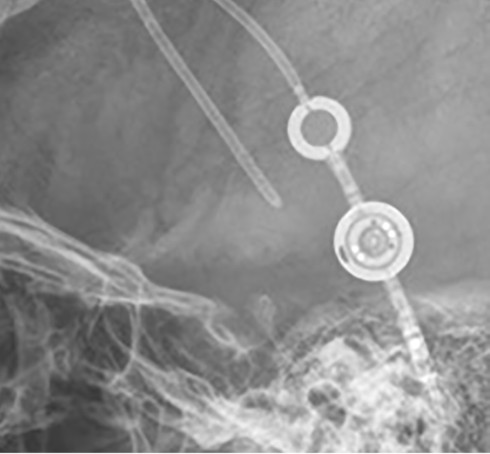
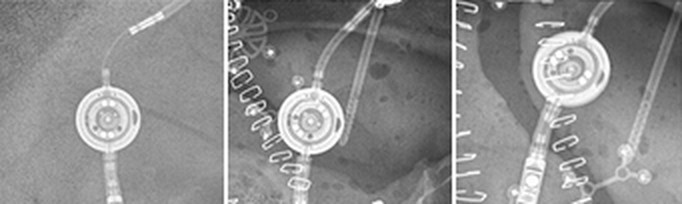
Adjustable differential-pressure unit (0–20 cmH2O) with an optional integrated SHUNTASSISTANT 2.0 gravitational unit (10–35 cmH2O). Lying = DP setting; upright = DP + gravitational unit.
| Mechanism | Titanium; ball-cone DP unit with bow spring on a braked rotor + tantalum-ball gravitational unit. |
|---|---|
| Range | DP 0–20 cmH2O in 1-cmH2O steps (factory preset 5) · gravitational unit none / 10 / 15 / 20 / 25 / 30 / 35 cmH2O |
| Measured as | Opening pressures in cmH2O; gravitational-unit values referenced to 5 mL/h (~1–2 cmH2O higher at 20 mL/h). |
| Tolerance | Not stated in the IFU excerpt |
| MRI | MR Conditional ≤3 T — no setting change — Miethke: verification after MRI is not required. |
| X-ray ID |
|
| Adjustment | proGAV 2.0 Compass (locate/read), Adjustment Tool, Checkmate, or M.blue plus instruments. Light pressure releases the rotor brake (click). |
Adjustable DP unit — adjustable
| cmH₂O | mmH₂O | mmHg |
|---|---|---|
| 0 | 0 | 0.0 |
| 1 | 10 | 0.7 |
| 2 | 20 | 1.5 |
| 3 | 30 | 2.2 |
| 4 | 40 | 2.9 |
| 5 | 50 | 3.7 |
| 6 | 60 | 4.4 |
| 7 | 70 | 5.1 |
| 8 | 80 | 5.9 |
| 9 | 90 | 6.6 |
| 10 | 100 | 7.4 |
| 11 | 110 | 8.1 |
| 12 | 120 | 8.8 |
| 13 | 130 | 9.6 |
| 14 | 140 | 10.3 |
| 15 | 150 | 11.0 |
| 16 | 160 | 11.8 |
| 17 | 170 | 12.5 |
| 18 | 180 | 13.2 |
| 19 | 190 | 14.0 |
| 20 | 200 | 14.7 |
Gravitational unit (fixed at implant; 0 = none) — fixed at implant
| cmH₂O | mmH₂O | mmHg |
|---|---|---|
| 0 (none) | 0 | 0.0 |
| 10 | 100 | 7.4 |
| 15 | 150 | 11.0 |
| 20 | 200 | 14.7 |
| 25 | 250 | 18.4 |
| 30 | 300 | 22.1 |
| 35 | 350 | 25.7 |
Opening pressure: lying = DP unit · upright = DP unit + gravitational unit. Use the converter for any combination.
Practical points from the manufacturer
- Change by ≤8 cmH2O per adjustment step — the rotor takes the short way (3 → 18 must go 3 → 11 → 18).
- Implant the gravitational unit parallel to the body axis (retroauricular is fine; height doesn't matter).
- Vibration (e.g., jogging) can transiently lower opening pressure by 25–35% (lab data).
Miethke proGAV · Miethke · Legacy (superseded by proGAV 2.0)
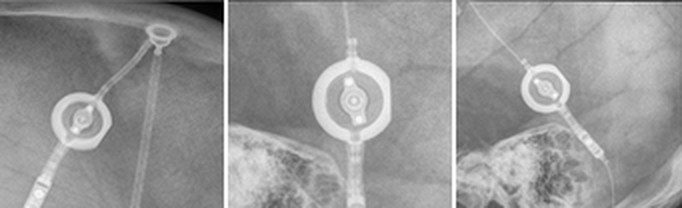
The first adjustable gravitational valve: adjustable DP unit 0–20 cmH2O with an optional integrated SHUNTASSISTANT.
| Mechanism | Titanium ball-cone DP unit on an adjustable rotor + tantalum-ball gravitational unit. |
|---|---|
| Range | DP 0–20 cmH2O · gravitational unit none / 10 / 15 / 20 / 25 / 30 / 35 cmH2O (20 and 25 are the standard levels) |
| Measured as | Opening pressures in cmH2O. |
| Tolerance | Not stated |
| MRI | MR Conditional ≤3 T — no setting change — Miethke: verification after MRI is not required. |
| X-ray ID |
|
| Adjustment | proGAV Verification Tool, Adjustment Tool, Checkmate. |
Adjustable DP unit — adjustable
| cmH₂O | mmH₂O | mmHg |
|---|---|---|
| 0 | 0 | 0.0 |
| 1 | 10 | 0.7 |
| 2 | 20 | 1.5 |
| 3 | 30 | 2.2 |
| 4 | 40 | 2.9 |
| 5 | 50 | 3.7 |
| 6 | 60 | 4.4 |
| 7 | 70 | 5.1 |
| 8 | 80 | 5.9 |
| 9 | 90 | 6.6 |
| 10 | 100 | 7.4 |
| 11 | 110 | 8.1 |
| 12 | 120 | 8.8 |
| 13 | 130 | 9.6 |
| 14 | 140 | 10.3 |
| 15 | 150 | 11.0 |
| 16 | 160 | 11.8 |
| 17 | 170 | 12.5 |
| 18 | 180 | 13.2 |
| 19 | 190 | 14.0 |
| 20 | 200 | 14.7 |
Gravitational unit (fixed at implant; 0 = none) — fixed at implant
| cmH₂O | mmH₂O | mmHg |
|---|---|---|
| 0 (none) | 0 | 0.0 |
| 10 | 100 | 7.4 |
| 15 | 150 | 11.0 |
| 20 | 200 | 14.7 |
| 25 | 250 | 18.4 |
| 30 | 300 | 22.1 |
| 35 | 350 | 25.7 |
Opening pressure: lying = DP unit · upright = DP unit + gravitational unit. Use the converter for any combination.
Practical points from the manufacturer
- Miethke starting levels: DP 5 cmH2O (NPH standard); gravitational unit 20 (children ≤5 y, adults >60 y) or 25 (children >5 y, adults ≤60 y); −5 if <1.60 m, +5 if >1.80 m; bedridden → no gravitational unit.
Miethke M.blue Adjustable Gravitational Valve (B. Braun / Aesculap) · Miethke · Current
No openly licensed radiograph yet — see Miethke's M.blue radiographic guide (brochure p. 19) ↗
One titanium valve combining a FIXED differential-pressure unit (0, 5, 10 or 15 cmH2O) with an ADJUSTABLE gravitational unit (0–40 cmH2O). Lying = DP unit; upright = DP + gravitational setting. It is an integrated valve, not an add-on.
| Mechanism | Fixed ball-cone DP unit + adjustable gravitational unit (tantalum weight, sapphire ball, braked rotor); Active-Lock against everyday magnets. |
|---|---|
| Range | Fixed DP unit 0 / 5 / 10 / 15 cmH2O (FX800T–FX803T) · gravitational unit continuously adjustable 0–40 cmH2O |
| Measured as | Opening pressures in cmH2O; intermediate body angles give graded values. |
| Tolerance | Not stated in the brochure |
| MRI | MR Conditional ≤3 T — no setting change; Active-Lock — Miethke: no X-ray verification after MRI needed. |
| X-ray ID |
|
| Adjustment | M.blue plus instruments: compass with floater (locate + read), adjustment ring (light pressure releases the rotor brake). |
Fixed DP unit (chosen at implant) — fixed at implant
| cmH₂O | mmH₂O | mmHg |
|---|---|---|
| 0 | 0 | 0.0 |
| 5 | 50 | 3.7 |
| 10 | 100 | 7.4 |
| 15 | 150 | 11.0 |
Adjustable gravitational unit — adjustable
| cmH₂O | mmH₂O | mmHg |
|---|---|---|
| 0 | 0 | 0.0 |
| 4 | 40 | 2.9 |
| 8 | 80 | 5.9 |
| 12 | 120 | 8.8 |
| 16 | 160 | 11.8 |
| 20 | 200 | 14.7 |
| 24 | 240 | 17.7 |
| 28 | 280 | 20.6 |
| 32 | 320 | 23.5 |
| 36 | 360 | 26.5 |
| 40 | 400 | 29.4 |
Continuously adjustable; every 4 cmH₂O shown (the dial's marked increments).
Opening pressure: lying = DP unit · upright = DP unit + gravitational unit. Use the converter for any combination.
Practical points from the manufacturer
- Miethke starting levels (DP 5 for all; upright total in brackets): <5 y grav 20 (25); ≥5 y 25 (30); adults 25 (30) [<1.60 m 20 (25); >1.80 m 30 (35)]; adults >65 y 20 (25) [<1.60 m 15 (20); >1.80 m 25 (30)]. Lower the gravitational unit for low mobility or high BMI.
Miethke M.blue plus (M.blue + proGAV 2.0 adjustable DP unit) · Miethke · Current
See Miethke M.blue brochure ↗
Both units adjustable: proGAV 2.0 DP unit (0–20 cmH2O) + M.blue gravitational unit (0–40 cmH2O).
| Mechanism | Adjustable ball-cone DP unit + adjustable gravitational unit, both braked rotors. |
|---|---|
| Range | DP 0–20 cmH2O + gravitational 0–40 cmH2O (FX804T) |
| Measured as | Opening pressures in cmH2O. |
| Tolerance | Not stated |
| MRI | MR Conditional ≤3 T — no setting change — Miethke: no verification after MRI needed. |
| X-ray ID |
|
| Adjustment | M.blue plus instruments adjust both units. |
Adjustable DP unit — adjustable
| cmH₂O | mmH₂O | mmHg |
|---|---|---|
| 0 | 0 | 0.0 |
| 1 | 10 | 0.7 |
| 2 | 20 | 1.5 |
| 3 | 30 | 2.2 |
| 4 | 40 | 2.9 |
| 5 | 50 | 3.7 |
| 6 | 60 | 4.4 |
| 7 | 70 | 5.1 |
| 8 | 80 | 5.9 |
| 9 | 90 | 6.6 |
| 10 | 100 | 7.4 |
| 11 | 110 | 8.1 |
| 12 | 120 | 8.8 |
| 13 | 130 | 9.6 |
| 14 | 140 | 10.3 |
| 15 | 150 | 11.0 |
| 16 | 160 | 11.8 |
| 17 | 170 | 12.5 |
| 18 | 180 | 13.2 |
| 19 | 190 | 14.0 |
| 20 | 200 | 14.7 |
Adjustable gravitational unit — adjustable
| cmH₂O | mmH₂O | mmHg |
|---|---|---|
| 0 | 0 | 0.0 |
| 4 | 40 | 2.9 |
| 8 | 80 | 5.9 |
| 12 | 120 | 8.8 |
| 16 | 160 | 11.8 |
| 20 | 200 | 14.7 |
| 24 | 240 | 17.7 |
| 28 | 280 | 20.6 |
| 32 | 320 | 23.5 |
| 36 | 360 | 26.5 |
| 40 | 400 | 29.4 |
Continuously adjustable; every 4 cmH₂O shown (the dial's marked increments).
Opening pressure: lying = DP unit · upright = DP unit + gravitational unit. Use the converter for any combination.
proSA
Add-on device MRI: no setting changeMiethke proSA — programmable SHUNTASSISTANT · Miethke · Current
See Miethke proSA IFU ↗
Add-on ADJUSTABLE gravitational unit (0–40 cmH2O) implanted in series below a differential-pressure valve. Open when lying; adds its setting when upright.
| Mechanism | Tantalum weight + sapphire ball; bow-spring pretension set by a braked rotor. |
|---|---|
| Range | 0–40 cmH2O (preset 20); Miethke recommends pairing with a 5 cmH2O DP unit |
| Measured as | cmH2O. |
| Tolerance | Not stated |
| MRI | MR Conditional ≤3 T — no setting change — Miethke: verification after MRI is not required. |
| X-ray ID |
|
| Adjustment | proSA Verification Tool + Adjustment Tool / Checkmate (masterdisc to check the tool). |
Adjustable gravitational unit — adjustable
| cmH₂O | mmH₂O | mmHg |
|---|---|---|
| 0 | 0 | 0.0 |
| 4 | 40 | 2.9 |
| 8 | 80 | 5.9 |
| 12 | 120 | 8.8 |
| 16 | 160 | 11.8 |
| 20 | 200 | 14.7 |
| 24 | 240 | 17.7 |
| 28 | 280 | 20.6 |
| 32 | 320 | 23.5 |
| 36 | 360 | 26.5 |
| 40 | 400 | 29.4 |
Continuously adjustable; every 4 cmH₂O shown (the dial's marked increments).
Codman HAKIM Precision Fixed Pressure Valve · Integra (Codman) · Current
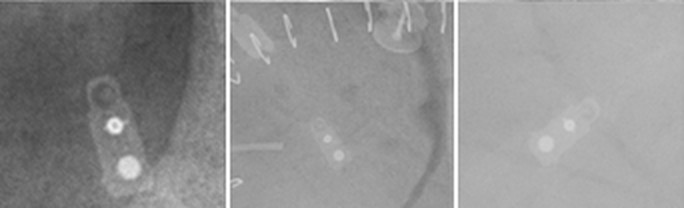
Fixed ball-in-cone valve in five pressure ranges; cylindrical, in-line, right-angle and micro housings; optional SiphonGuard, Rickham reservoir, Bactiseal catheters.
| Mechanism | Ruby ball-in-cone with fixed spring. |
|---|---|
| Measured as | Operating pressure printed on the FDA device label. |
| Tolerance | ±10 mmH2O |
| MRI | Fixed valve — no setting to change — No setting check needed. |
| X-ray ID |
|
| Setting | mmH₂O | cmH₂O | mmHg | Tolerance |
|---|---|---|---|---|
| Very Low | 10 | 1.0 | 0.7 | ±10 |
| Low | 40 | 4.0 | 2.9 | ±10 |
| Medium Low | 70 | 7.0 | 5.1 | ±10 |
| Medium High | 100 | 10.0 | 7.4 | ±10 |
| High | 130 | 13.0 | 9.6 | ±10 |
Practical points from the manufacturer
- Some newer labels read only 'Medium Range' without a number — check the package label or implant record.
Medtronic PS Medical Delta Valve · Medtronic (PS Medical) · Current
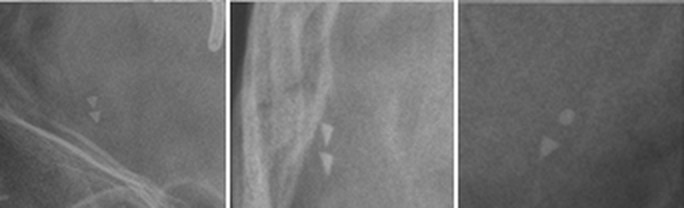
Fixed performance-level membrane valve with an integral Delta chamber; regular, small and neonatal sizes. Non-metallic.
| Mechanism | Membrane valve (polypropylene + silicone) + normally closed Delta chamber ('hydrodynamic leverage'). |
|---|---|
| Measured as | Median pressure at 5 → 50 mL/h; lying = 0, upright = −50 cmH2O hydrostatic. Nominal = midpoint. |
| Tolerance | Not stated |
| MRI | Non-metallic — no MRI/CT interference — No setting check needed. |
| X-ray ID |
|
| Setting | Lying mmH₂O | cmH₂O | mmHg | Range (mmH₂O) | Upright mmH₂O | Upright mmHg |
|---|---|---|---|---|---|---|
| PL 0.5 | 20 | 2.0 | 1.5 | 15–25 | 40 (30–50) | 2.9 |
| PL 1.0 | 45 | 4.5 | 3.3 | 35–55 | 60 (50–70) | 4.4 |
| PL 1.5 | 80 | 8.0 | 5.9 | 70–90 | 95 (85–105) | 7.0 |
| PL 2.0 | 115 | 11.5 | 8.5 | 105–125 | 130 (120–140) | 9.6 |
Medtronic PS Medical CSF-Flow Control Valves (contoured, burr hole, ultra small) · Medtronic (PS Medical) · Current
No openly licensed radiograph yet — see Medtronic catalog p. 14 ↗
Classic fixed differential-pressure membrane valves in four ranges, identified by a dot code.
| Mechanism | Membrane valve (polypropylene + silicone); non-metallic. |
|---|---|
| Measured as | Median pressure at 5 → 50 mL/h; nominal = midpoint. |
| Tolerance | Not stated |
| MRI | Non-metallic — no MRI/CT interference — No setting check needed. |
| X-ray ID |
|
| Setting | mmH₂O | cmH₂O | mmHg | Range (mmH₂O) |
|---|---|---|---|---|
| Low-Low | 20 | 2.0 | 1.5 | 10–30 |
| Low | 37.5 | 3.8 | 2.8 | 30–45 |
| Medium | 95 | 9.5 | 7.0 | 85–105 |
| High | 157.5 | 15.8 | 11.6 | 145–170 |
Sophysa Sophy Mini SM1 Monopressure Valve · Sophysa · Current
See Sophysa SM1 brochure ↗
Low-profile fixed ball-in-cone valve in three pressures; A = antechamber, B = burr-hole reservoir.
| Mechanism | Ball-in-cone, fixed. |
|---|---|
| Measured as | Sophysa labelled pressure. |
| Tolerance | Not stated in the brochure |
| MRI | Monopressure — no setting to change (artifact ~9–12 mm) — No setting check needed. |
| X-ray ID |
|
| Setting | mmH₂O | cmH₂O | mmHg |
|---|---|---|---|
| L (Low) | 50 | 5.0 | 3.7 |
| M (Medium) | 110 | 11.0 | 8.1 |
| H (High) | 170 | 17.0 | 12.5 |
Miethke GAV 2.0 Gravitational Assisted Valve · Miethke · Current
See Miethke GAV 2.0 IFU ↗
Fixed ball-cone DP unit + fixed gravitational unit in one titanium valve; six lying/upright combinations.
| Mechanism | Ball-cone (spring) unit + tantalum-ball gravitational unit. |
|---|---|
| Measured as | cmH2O. |
| Tolerance | Not stated |
| MRI | MR Conditional ≤3 T; fixed — No setting check needed. |
| X-ray ID |
|
| Setting | Lying mmH₂O | cmH₂O | mmHg | Upright mmH₂O | Upright mmHg |
|---|---|---|---|---|---|
| 5 / 20 | 50 | 5.0 | 3.7 | 200 | 14.7 |
| 5 / 25 | 50 | 5.0 | 3.7 | 250 | 18.4 |
| 5 / 30 | 50 | 5.0 | 3.7 | 300 | 22.1 |
| 5 / 35 | 50 | 5.0 | 3.7 | 350 | 25.7 |
| 10 / 25 | 100 | 10.0 | 7.4 | 250 | 18.4 |
| 10 / 30 | 100 | 10.0 | 7.4 | 300 | 22.1 |
Miethke GAV Gravitational Assisted Valve · Miethke · Legacy
See Miethke GAV IFU ↗
Original gravitational assisted valve; six lying/upright combinations measured at 5 mL/h.
| Mechanism | Ball-cone unit + tantalum-ball gravitational unit (titanium). |
|---|---|
| Measured as | Pressure drop at 5 mL/h (cmH2O). |
| Tolerance | Not stated |
| MRI | MR Conditional ≤3 T; fixed — No setting check needed. |
| X-ray ID |
|
| Setting | Lying mmH₂O | cmH₂O | mmHg | Upright mmH₂O | Upright mmHg |
|---|---|---|---|---|---|
| 5 / 30 | 50 | 5.0 | 3.7 | 300 | 22.1 |
| 5 / 35 | 50 | 5.0 | 3.7 | 350 | 25.7 |
| 5 / 40 | 50 | 5.0 | 3.7 | 400 | 29.4 |
| 10 / 30 | 100 | 10.0 | 7.4 | 300 | 22.1 |
| 10 / 40 | 100 | 10.0 | 7.4 | 400 | 29.4 |
| 10 / 50 | 100 | 10.0 | 7.4 | 500 | 36.8 |
Practical points from the manufacturer
- Choose the upright pressure from the height difference between the third ventricle and the diaphragm (Miethke).
Miethke paediGAV · Miethke · Current
See Miethke paediGAV IFU ↗
Pediatric gravitational assisted valve; six lying/upright combinations (coding rings).
| Mechanism | Ball-cone (spiral spring) unit + gravitational unit. |
|---|---|
| Measured as | cmH2O. |
| Tolerance | Not stated |
| MRI | MR Conditional ≤3 T; fixed — No setting check needed. |
| X-ray ID |
|
| Setting | Lying mmH₂O | cmH₂O | mmHg | Upright mmH₂O | Upright mmHg |
|---|---|---|---|---|---|
| 4 / 14 | 40 | 4.0 | 2.9 | 140 | 10.3 |
| 4 / 19 | 40 | 4.0 | 2.9 | 190 | 14.0 |
| 4 / 24 | 40 | 4.0 | 2.9 | 240 | 17.7 |
| 9 / 19 | 90 | 9.0 | 6.6 | 190 | 14.0 |
| 9 / 24 | 90 | 9.0 | 6.6 | 240 | 17.7 |
| 9 / 29 | 90 | 9.0 | 6.6 | 290 | 21.3 |
Practical points from the manufacturer
- Miethke recommendations: <6 months 4/24; 6 months–5 years 9/24; >5 years 9/29 cmH2O.
Miethke DUALSWITCH VALVE · Miethke · Current
See Miethke DSV IFU ↗
Two parallel chambers — a low-pressure chamber active lying and a high-pressure chamber active upright — switched by a tantalum ball.
| Mechanism | Titanium; two spring-loaded discs on silicone membranes; tantalum-ball switch. |
|---|---|
| Range | Lying 5 / 10 (standard) / 13 / 16 cmH2O · upright 30 / 40 / 50 cmH2O |
| Measured as | Horizontal ratings at 20 mL/h (cmH2O). |
| Tolerance | Not stated |
| MRI | MR Conditional ≤3 T; fixed — No setting check needed. |
| X-ray ID |
|
Low-pressure (lying) chamber — fixed at implant
| cmH₂O | mmH₂O | mmHg |
|---|---|---|
| 5 | 50 | 3.7 |
| 10 | 100 | 7.4 |
| 13 | 130 | 9.6 |
| 16 | 160 | 11.8 |
High-pressure (upright) chamber — fixed at implant
| cmH₂O | mmH₂O | mmHg |
|---|---|---|
| 30 | 300 | 22.1 |
| 40 | 400 | 29.4 |
| 50 | 500 | 36.8 |
Opening pressure: lying = low-pressure chamber · upright = high-pressure chamber.
Practical points from the manufacturer
- Pick the high side just above (Monro-to-diaphragm distance − 5 cm) so standing IVP stays −5 to +5 cmH2O (Miethke).
Miethke miniNAV · Miethke · Current
See Miethke miniNAV brochure ↗
Smallest Miethke differential-pressure valve (premature/newborn infants, bedridden patients); combine with a SHUNTASSISTANT/proSA for active patients.
| Mechanism | Ball + spring in a slim titanium shell. |
|---|---|
| Measured as | cmH2O. |
| Tolerance | Not stated |
| MRI | MR Conditional ≤3 T; fixed — No setting check needed. |
| X-ray ID |
|
| Setting | mmH₂O | cmH₂O | mmHg |
|---|---|---|---|
| 0 | 0 | 0.0 | 0.0 |
| 5 | 50 | 5.0 | 3.7 |
| 10 | 100 | 10.0 | 7.4 |
| 15 | 150 | 15.0 | 11.0 |
Integra DP
Fixed No setting to changeIntegra DP Valve System · Integra · Legacy (many SKUs no longer in US distribution)
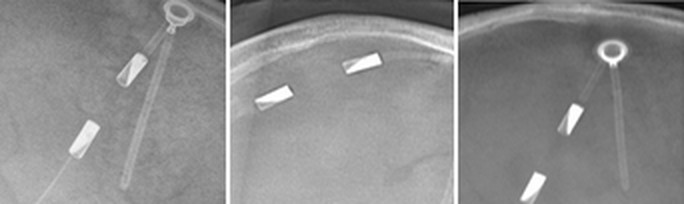
Fixed differential-pressure valve with two ruby ball-in-cone mechanisms in series (stainless steel housings); colour-coded pressure ranges; the very-low (blue band) model is for hygroma / extraventricular drainage.
| Mechanism | Two ball-in-cone mechanisms in series. |
|---|---|
| MRI | Fixed valve — No setting check needed. |
| X-ray ID |
|
| Converter | Not convertible — No publicly accessible manufacturer document gives the numeric pressure for each colour band — check the implant record / package label. |
Spitz-Holter
Fixed No setting to changeSpitz-Holter valve (historic, 1956) · Holter (later Integra) · Historic
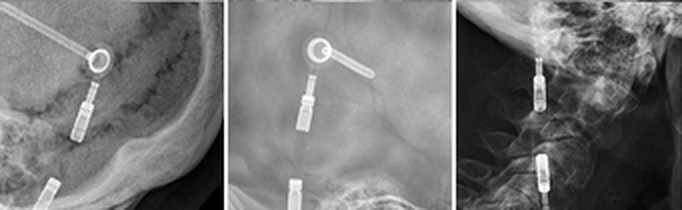
Historic in-line slit valve still seen on films of long-shunted patients.
| Mechanism | Silicone slit valves in a cylindrical housing with metal end fittings. |
|---|---|
| MRI | Fixed valve — No setting check needed. |
| X-ray ID |
|
| Converter | Not convertible — Historic device; no current manufacturer pressure documentation. |
SHUNTASSISTANT 2.0 (SA 2.0)
Add-on device No setting to changeMiethke SHUNTASSISTANT 2.0 · Miethke · Current
See Miethke SA 2.0 IFU ↗
Add-on FIXED gravitational unit implanted in series with any conventional or adjustable DP valve. Open lying; adds its rating upright.
| Mechanism | Titanium housing, heavy tantalum ball over a sapphire locking ball. |
|---|---|
| Measured as | Referenced to 5 mL/h (~1–2 cmH2O higher at 20 mL/h). |
| Tolerance | Not stated |
| MRI | MR Conditional ≤3 T; fixed — No setting check needed. |
| X-ray ID |
|
| Setting | Adds upright | mmHg |
|---|---|---|
| 10 | +100 mmH₂O (10.0 cmH₂O) | +7.4 |
| 15 | +150 mmH₂O (15.0 cmH₂O) | +11.0 |
| 20 | +200 mmH₂O (20.0 cmH₂O) | +14.7 |
| 25 | +250 mmH₂O (25.0 cmH₂O) | +18.4 |
| 30 | +300 mmH₂O (30.0 cmH₂O) | +22.1 |
| 35 | +350 mmH₂O (35.0 cmH₂O) | +25.7 |
Practical points from the manufacturer
- Implant parallel to the body axis: chest wall in adults, behind the ear in children; abdomen/back for LP shunts.
SHUNTASSISTANT / paediSHUNTASSISTANT
Add-on device No setting to changeMiethke SHUNTASSISTANT (original) and paediSHUNTASSISTANT · Miethke · Legacy
See Miethke SHUNTASSISTANT IFU ↗
Original add-on gravitational unit (15–35 cmH2O) and the smaller pediatric version (10 cmH2O).
| Mechanism | Titanium casing, weight ball, sealing ball. |
|---|---|
| Measured as | Referenced to 5 mL/h (~1–2 cmH2O higher at 20 mL/h). |
| Tolerance | Not stated |
| MRI | MR Conditional ≤3 T; fixed — No setting check needed. |
| X-ray ID |
|
| Setting | Adds upright | mmHg |
|---|---|---|
| paediSA 10 | +100 mmH₂O (10.0 cmH₂O) | +7.4 |
| 15 | +150 mmH₂O (15.0 cmH₂O) | +11.0 |
| 20 | +200 mmH₂O (20.0 cmH₂O) | +14.7 |
| 25 | +250 mmH₂O (25.0 cmH₂O) | +18.4 |
| 30 | +300 mmH₂O (30.0 cmH₂O) | +22.1 |
| 35 | +350 mmH₂O (35.0 cmH₂O) | +25.7 |
Practical points from the manufacturer
- Miethke sizing method: (DP valve + SA) ≈ (diaphragm → foramen of Monro distance) − 5 cm. Example: 42 cm, DP 13 → choose SA 25 → standing IVP ≈ −4 cmH2O.
SiphonX
Add-on device No setting to changeSophysa SiphonX gravitational anti-siphon device (SX-200) · Sophysa · Current
See Sophysa SiphonX brochure ↗
Add-on gravitational anti-siphon device placed downstream of a valve: +200 mmH2O fully upright, 0 lying, angle-dependent in between; not affected by implant height.
| Mechanism | Ball-in-cone; tantalum weight ball presses on a ruby ball. |
|---|---|
| Measured as | Same curve for 5–50 mL/h. |
| Tolerance | Not stated |
| MRI | MR Conditional with Polaris/Sophy systems; fixed — No setting check needed. |
| X-ray ID |
|
| Setting | Adds upright | mmHg |
|---|---|---|
| SX-200 | +200 mmH₂O (20.0 cmH₂O) | +14.7 |
SiphonGuard
Add-on device No setting to changeCodman SIPHONGUARD Anti-Siphon Device · Integra (Codman) · Current
FLOW-activated (not posture-activated) anti-siphon device integrated into some Hakim, Hakim Precision and CERTAS Plus valves.
| Mechanism | Dual pathway: a surge in flow closes the central ruby ball-and-cone, forcing all CSF through a long spiral secondary path (resistance 1 cmH2O per mL/h); it reopens when flow falls and never fully stops. |
|---|---|
| MRI | No setting |
| X-ray ID |
|
| Converter | Not convertible — Adds flow-dependent resistance, not a fixed upright pressure. Does not activate at low CSF flow. |
Practical points from the manufacturer
- Prime slowly (~0.5 mL/min) — fast priming can trigger the closed (secondary-path) state.
- Any orientation and body location distal to the valve mechanism is allowed.
Gravity Compensating Accessory
Add-on device No setting to changeIntegra Gravity Compensating Accessory (GCA) · Integra · Legacy
Posture-activated add-on placed anywhere along the distal tubing: a ruby ball held on its seat (when vertical) by two to four stainless steel balls; each ball adds resistance upright, minimal resistance lying.
| Mechanism | Stainless steel housing in silicone; 2–4 steel balls load a ruby ball. |
|---|---|
| MRI | No setting |
| X-ray ID |
|
| Converter | Not convertible — The FDA summary gives the mechanism but not the added pressure per ball count. |
OSV II (flow-regulating)
Flow-regulated No setting to changeIntegra OSV II Valve System (and Flow Regulating Valve Low Flow) · Integra · Current
Flow-regulating valve designed to drain close to CSF secretion (18–30 mL/h) rather than at a set opening pressure.
| Mechanism | Variable-resistance pin-and-seat flow regulator; three stages; mechanism has no metal. |
|---|---|
| Measured as | Stage I: opens at ~5 mL/h (ΔP 30–80 mmH2O), stays in stage I to 18 mL/h (ΔP 40–120). Stage II: holds 18–30 mL/h over ΔP 120–300. Stage III: pressure-relief mode for abrupt ICP rise. |
| MRI | MR Conditional ≤3 T (max gradient 3500 G/cm); flow characteristics unaffected — No setting. |
| X-ray ID |
|
| Converter | Not convertible — Regulates flow, not opening pressure — no setting maps to a single pressure. |
Practical points from the manufacturer
- OSV II for drainage ≈ CSF secretion (18–30 mL/h); Low Flow model for 8–17 mL/h.
M.flow
Flow-regulated MRI: no setting changeMiethke M.flow adjustable flow-reducing unit · Miethke · Current
Adjustable FLOW-RESISTANCE unit with a full shunt switch-off range, used together with M.blue.
| Mechanism | Rotor aperture sets the effective length of a circular flow channel (= resistance); a channel interruption gives 'shunt off'. |
|---|---|
| MRI | MR Conditional ≤3 T — no setting change — Miethke: verification after MRI is not required. |
| X-ray ID |
|
| Converter | Not convertible — Sets flow resistance, not an opening pressure. |